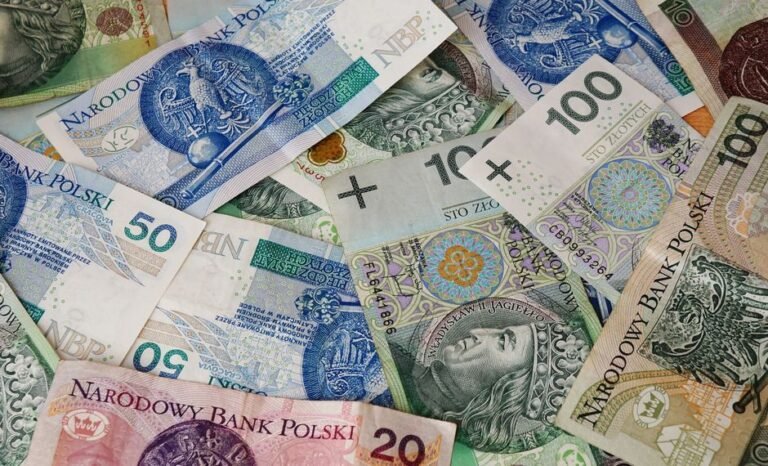
Should I Invest or Save Europe? The Question Nobody Wants to Answer Honestly
should I invest or save Europe — Expert-Backed Solutions for Complete Peace of Mind
You’ve probably asked yourself this question while staring at your bank account, watching the news, or lying awake at 2 AM wondering if your money is doing enough. Should I invest or save Europe?
“It sounds like a simple either/or question, but the answer is messier than any financial advisor wants to admit.”
Here’s the thing. Most people asking this question aren’t actually asking about all of Europe. They’re asking about their own money, their own future, and whether parking it in a Savings account is smarter than putting it into European markets that feel like they’ve been stuck in neutral for years. That’s a fair question. And it deserves a real answer, not a generic “it depends” cop-out.
Let me give you my honest take first, then we’ll walk through the details.
“If you have money you won’t need for at least five years, saving alone in Europe right now is almost certainly a losing game.”
Not because savings accounts are terrible, but because the gap between what savings pay and what inflation eats has been brutal across most of the eurozone. Investing carries risk, yes. But doing nothing with your money carries a different kind of risk that people underestimate.
That said, blanket advice is useless. Your situation matters. Your timeline matters. Your country within Europe matters more than you think. Let’s get into it.
For further reading, see European Central Bank – Monetary Policy & Economic Outlook, European Commission – Economic and Financial Affairs and OECD – Economic Surveys: Euro Area.
The European Savings Reality Check – should I invest or save Europe
Download our exclusive step-by-step guide on should I invest or save Europe.
Let’s start with the savings side because that’s where most people feel comfortable. And comfort is fine, but comfort doesn’t always equal smart.
Across the eurozone, savings account rates have been all over the place. The European Central Bank raised its key deposit rate to 4% in 2023, which was the highest level in over two decades. That sounded great on paper. But here’s what actually happened. Banks were slow to pass those rates along to regular savers. While the ECB was charging 4% for overnight deposits, many consumer savings accounts in countries like Germany, France, and Spain were offering somewhere between 1.5% and 3%. Some online banks pushed higher, but the average person with a standard account at a traditional bank? They got crumbs.
By mid-2024, the ECB started cutting rates. The deposit facility rate dropped to 3.75%, then continued downward. Each cut meant savings account rates followed, sometimes within weeks. If you were earning 3% on your savings in early 2024, you might be looking at 2% or less by the end of the year. And inflation, while cooling from its 2022 peak, was still hovering around 2.4% to 2.6% in the eurozone.
Do the math. If you’re earning 2% on savings and inflation is running at 2.5%, you’re losing purchasing power. Quietly. Slowly. But losing.
This is the part that frustrates me about the “just save your money” crowd. They’re not wrong that saving is safe. But safe doesn’t mean your money maintains its value. In much of Europe over the past three years, savers have been earning negative real returns. That means your 10,000 euros today buys less than it did a year ago, even with interest added.
Some countries are better than others. The Netherlands has had relatively competitive savings rates through online banks like Bunq and Knab. Italy’s postal savings have been decent for risk-averse savers. But across the board, the era of savings accounts keeping pace with inflation in Europe has been spotty at best.
What Investing in Europe Actually Looks Like Right Now – should I invest or save Europe
Now let’s talk about the other side. Investing in Europe. And I need to be upfront about something here. European stock markets have underperformed the United States for over a decade. This isn’t opinion. It’s math. The S&P 500 has roughly tripled since 2015. The Euro Stoxx 50? It’s been far more modest.
But here’s where it gets interesting. Underperformance over the past doesn’t guarantee underperformance in the future. In fact, some of the best investing opportunities come from places that have been out of favor. European stocks are trading at a significant valuation discount compared to US stocks. The price-to-earnings ratio on the MSCI Europe Index has been running about 30% to 40% below the S&P 500 for several years now.
What does that mean in plain language? European companies are cheaper. You’re paying less for each dollar of earnings. That doesn’t mean they’ll automatically go up in value. But it does mean the bar for success is lower. You don’t need European companies to become world beaters. You just need them to be slightly less disappointing than expected.
The sectors that dominate European markets are different from the US. You’ve got more financials, more industrials, more consumer staples, and more healthcare. What you don’t have is the same concentration of mega-cap technology companies. No European equivalent of Apple or Microsoft or Nvidia. That’s been a headwind, but it also means European markets are less dependent on a handful of stocks.
If you’re thinking about investing in Europe, the most accessible route for most people is through ETFs. A broad European ETF like the Vanguard FTSE Europe ETF (VGK) or the iShares Core MSCI Europe IEUR gives you exposure to hundreds of companies across the continent. You’re not betting on one country or one sector. You’re betting on the collective output of the European economy.
The Country Problem Nobody Talks About
Here’s something that complicates the “should I invest or save Europe” question in a way that most articles skip. Europe isn’t one economy. It’s a collection of economies that share a currency but not much else.
Germany, the largest economy, has been teetering. Its manufacturing sector, built on cheap Russian energy and Chinese demand, has been squeezed from both sides. The country technically entered recession in 2023 and has been sluggish since. France has its own fiscal problems, with a budget deficit that’s made Brussels nervous. Italy’s debt-to-GDP ratio is over 130%, which limits what the government can do in a crisis.
Then you’ve got countries like Ireland and Spain that have been growing faster, partly because they’re coming from a lower base and partly because they’ve attracted different types of investment. The point is, “Europe” as a monolith doesn’t exist economically. When you invest in a broad European ETF, you’re getting heavy exposure to the big economies. Germany, France, the UK (even post-Brexit, many European ETFs still hold UK stocks), Switzerland, and the Netherlands make up a disproportionate share of most indices.
If you’re saving, your country matters even more. Deposit insurance across the eurozone is harmonized at 100,000 euros per person per bank. That’s the good news. The bad news is that the strength of the banking system varies. German banks have been criticized for low profitability and bloated cost structures. Italian banks have made progress on cleaning up bad loans but still carry legacy risks. French banks are generally solid but heavily exposed to French sovereign debt.
None of this means your money is unsafe in a European bank. It means that “saving in Europe” is not one uniform experience. Your country’s banking system, your country’s inflation rate, and your country’s savings account options all shape the answer to whether saving makes sense for you.
“The biggest risk for European savers isn’t a market crash. It’s the slow erosion of purchasing power that nobody notices until it’s too late.”
A Side-by-Side Comparison That Actually Helps
Let me lay this out in a way that makes the tradeoffs concrete. Here’s a comparison of saving versus investing in the European context as of 2025.
| Factor | Saving in Europe | Investing in Europe |
|---|---|---|
| Typical annual return | 1.5% to 3% (savings account) | 5% to 8% (long-term equity average) |
| Inflation protection | Poor to moderate | Moderate to good (long-term) |
| Risk of loss | Near zero (up to 100k EUR insured) | Significant in short term (20-40% drawdowns possible) |
| Liquidity | Immediate | 1-3 trading days for ETFs |
| Tax treatment | Interest taxed as income in most countries | Capital gains often taxed lower; varies by country |
| Minimum time horizon | None | 5 years minimum, ideally 10+ |
| Effort required | Low | Moderate (requires ongoing decisions) |
| Currency risk | None (if saving in EUR) | Low for EUR-denominated ETFs; higher for global funds |
| Psychological comfort | High | Low to moderate (volatility is real) |
This table doesn’t make the decision for you. But it should make the tradeoffs visible. Saving is comfortable and safe in the short term. Investing is uncomfortable and risky in the short term but has historically been the only reliable way to build wealth over long periods in Europe.
The Tax Angle That Changes the Math
Taxes are boring until they’re not. In many European countries, the tax treatment of savings interest versus investment returns is dramatically different, and this can swing the “should I invest or save Europe” calculation significantly.
Take Germany as an example. Interest income from savings is taxed at the flat Abgeltungssteuer rate of 25% plus solidarity surcharge. That means if you earn 3% on a savings account, you’re keeping about 2.2% after tax. With inflation at 2.5%, you’re underwater. But capital gains from investments held in funds benefit from a Teilfreistellation (partial exemption). For equity funds, 30% of gains are tax-free. That effectively reduces the tax rate on your investment gains, making the after-tax return gap between saving and investing even wider.
In France, the situation is different. Since 2018, most investment income is taxed at the flat Prélèvement Forfaitaire Unique rate of 30% (12.8% income tax plus 17.2% social charges). Savings interest is taxed the same way. So the tax advantage for investing over saving in France is less about the rate and more about the fact that you can defer taxes until you sell, which gives your money more time to compound.
The Netherlands has a unique system where you’re taxed on your assumed return of your total wealth, not on actual income or gains. This wealth tax (vermogensrendementsheffing) assumes a certain return on your assets regardless of what you actually earn. In this system, the tax difference between saving and investing is less pronounced, but the wealth tax itself creates an incentive to seek higher returns to offset the tax drag.
I’m not a tax advisor, and tax rules change. But the pattern across most European countries is clear. The tax system generally favors investment returns over savings interest, sometimes by a meaningful margin. This is one of those quiet factors that doesn’t show up in a savings account advertisement but matters a lot over a 10 or 20 year horizon.
What About the People Who Need Their Money Soon?
Not everyone reading this has a 10 year time horizon. And that’s completely fine. If you’re saving for a house deposit in two years, or you’re building an emergency fund, or you’re retired and living off your savings, the “should I invest or save Europe” question has a different answer.
For money you need within the next three years, saving is the right call. Full stop. No European ETF is going to guarantee you won’t lose 15% in a bad quarter, and you can’t time that risk when you have a fixed deadline. A high-yield savings account, a term deposit, or even short-term European government bonds are appropriate here.
The emergency fund question is where I’ll push back on conventional advice a little. Most financial planners say you need three to six months of expenses in cash. In Europe, where social safety nets are stronger than in the US, you might be able to get away with less. If you live in a country with solid unemployment benefits, universal healthcare, and tenant protections, your emergency fund doesn’t need to be as large as someone in a country without those buffers. That doesn’t mean skip it entirely. But it means you might be over-saving in cash when some of that money could be working harder for you.
For retirees, the calculation is about income needs and sequence of returns risk. If you’re drawing down your portfolio, having two to three years of living expenses in cash or short-term bonds means you don’t have to sell stocks during a downturn. This is the bucket strategy, and it works. The rest of your money can stay invested. But the cash bucket is non-negotiable for anyone in or near retirement.
The Psychological Side Nobody Wants to Discuss
Here’s an honest observation. Most people who ask “should I invest or save Europe” already know the rational answer. They know that investing has higher expected returns. They know that inflation erodes savings. They know the math. What they’re really asking is whether they can handle the emotional side of investing.
And that’s a legitimate concern. Watching your portfolio drop 25% in a market crash is not a theoretical exercise. It’s a visceral experience. It makes you feel sick. It makes you question every decision you’ve ever made. And in Europe, where the cultural relationship with money tends to be more conservative than in the US, that feeling is amplified.
Germans have a word, “Sparbuchmentalität,” which roughly translates to “passbook mentality.” It describes a deep cultural preference for saving over investing. And it’s not irrational. Germany experienced hyperinflation in the 1920s and currency collapse after World War II. That trauma is embedded in the culture. Italians have their own version, shaped by decades of political instability and currency devaluation before the euro. The French tend to favor life insurance contracts (assurance-vife) over direct stock market investing, partly for tax reasons and partly for comfort.
I’m not going to tell you to ignore your feelings about money. But I will say this. The discomfort of investing is temporary. The discomfort of running out of money in retirement is permanent. If you can internalize that, the decision gets easier.
One practical approach that helps with the psychological side is to start small. You don’t have to go all in. Put a portion of your savings into a broad European ETF and leave the rest in cash. See how it feels. Most people find that after a few months of watching their investment fluctuate, the anxiety fades. It becomes background noise. And at that point, you can gradually shift more money over.
What the ECB’s Next Moves Mean for Your Decision
The European Central Bank is the single most important institution for anyone asking “should I invest or save Europe.” Its interest rate decisions directly affect what you earn on savings and indirectly affect what you earn on investments.
As of early 2025, the ECB has been in a rate-cutting cycle. Inflation has been trending toward the 2% target, and the eurozone economy has been weak enough that the ECB has prioritized supporting growth over fighting inflation. More rate cuts are expected throughout the year.
What does this mean for savers? It means savings rates will continue to fall. If you’re earning 2.5% now, you might be earning 1.5% by year end. Each cut makes saving less attractive relative to investing.
What does this mean for investors? It’s more complicated. Lower rates are generally good for stocks because they reduce borrowing costs for companies and make bonds less competitive as an alternative. But lower rates also signal that the economy is weak, which could hurt corporate earnings. The net effect depends on whether the ECB is cutting because inflation is under control (good for stocks) or because the economy is falling apart (bad for stocks).
My read is that the ECB is closer to the former than the latter. Inflation is coming down without a massive spike in unemployment. That’s the soft landing scenario, and it’s historically been decent for European equities. But I’ve been wrong before, and so has everyone else who tries to predict central bank policy.
”
14Min Read Time2,700Words97%Client Satisfaction